
25-Year-Old Study Retracted: What You Need to Know
The recent retraction of a 2000 review article on the safety of glyphosate—more than 25 years after its publication—has understandably confused and puzzled many.
While “retracted study” sounds startling, it’s important to understand the full picture. As every farmer knows, you have to dig in the soil a bit if you want to get to the root of the issue.
The short answer: the retraction was initiated at the behest of activist researchers, and was due to a procedural disclaimer issue; it does NOT alter the overwhelming scientific consensus. Regulators, toxicologists, and more than 50 years of science have repeatedly affirmed the same conclusion: glyphosate is safe to use as directed on the label.
Why was this study retracted now?
The retraction was prompted not by regulators or toxicologists, but by two researchers, Alexander Kaurov and Naomi Oreskes, who published a paper in 2025 questioning if the 2000 study was “ghost-written.” After publication, they reportedly submitted a request to retract the study citing those claims.
As Firebreak has noted, their paper was funded solely by the Rockefeller Family Fund, an organization deeply involved in coordinated litigation campaigns targeting U.S. companies. Other reports have highlighted similar connections between Oreskes and the litigation industry, using manipulated data and cherry-picked materials to promote a predetermined narrative.
Despite these significant concerns, the journal proceeded under COPE guidelines once the request was filed—the first such request in 25 years. As the journal’s Editor-in-Chief made clear, the decision was procedural, not scientific: the retraction “does not imply a stance” on the safety of glyphosate.
What does the retraction mean for the science supporting the safety of glyphosate?
Regulators worldwide have emphasized that this single review article played no meaningful role in their current evaluations. But you don’t have to take the Modern Ag Alliance’s word for it—you can see what the U.S. Environmental Protection Agency (EPA), Health Canada, and European Food Safety Authority (EFSA) have each said for yourself. As the journal’s Editor-in-Chief made clear, the decision was procedural, not scientific: the retraction “does not imply a stance” on the safety of glyphosate.
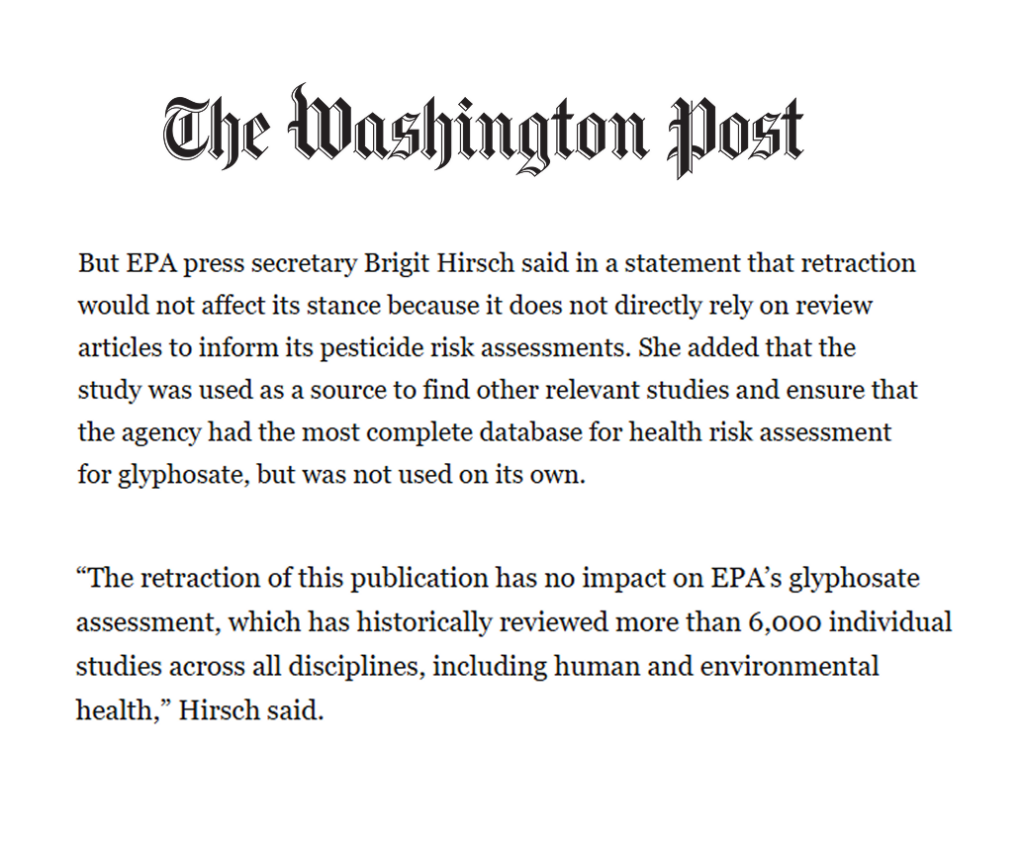
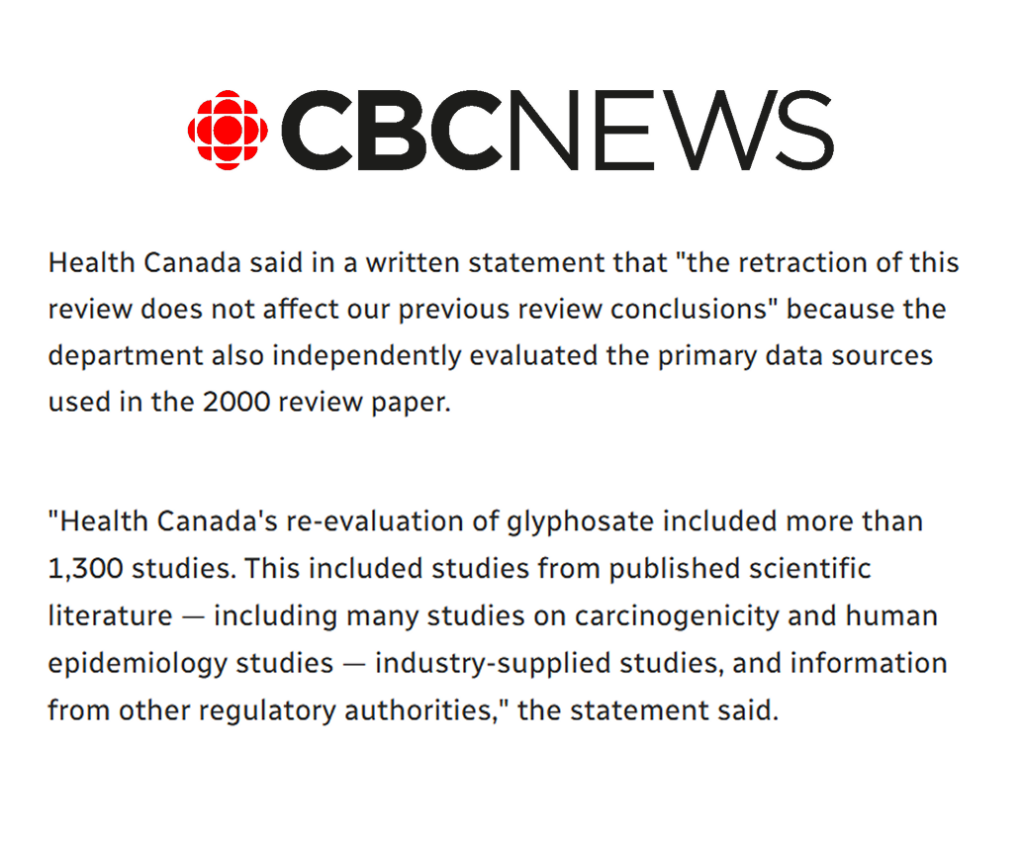
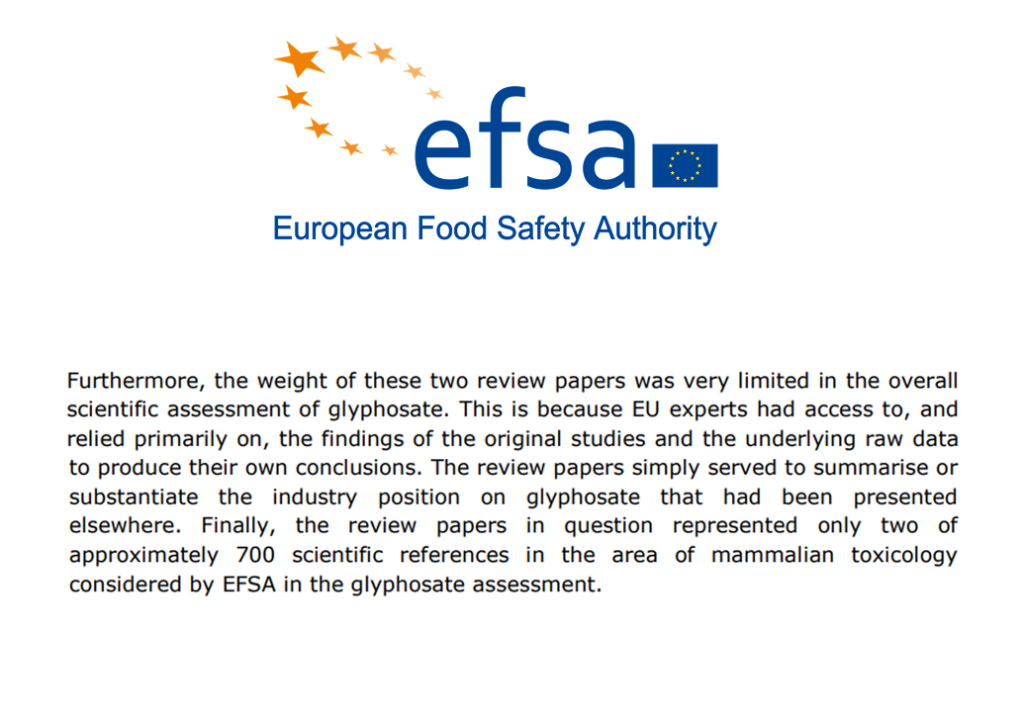
The consensus among regulators worldwide remains unchanged: glyphosate is safe when used as directed.
It’s also important to remember that the retracted article is 25 years old. Since then, research has only grown more rigorous. In 2018, the Journal of the National Cancer Institute published results from the landmark Agricultural Health Study, which tracked more than 50,000 licensed pesticide applicators for over two decades. That study remains one of the most comprehensive real-world exposure analyses ever conducted, and it continues to reaffirm glyphosate’s safety.
What does this mean for the future of glyphosate?
This retraction is not new science. The safety of glyphosate continues to be backed by strong, long-standing scientific research, and this retraction doesn’t change regulators’ assessments of its safety. EPA is currently re-reviewing glyphosate through its normal regulatory cycle. The retraction does not affect its current registration or availability.
But farmers and others should be aware of a growing challenge: activist-driven falsehoods and litigation industry attack campaigns continue to generate uncertainty about essential crop protection tools like glyphosate. It’s critical that policymakers provide legislative clarity and reaffirm the EPA’s gold standard, science-based review process of crop protection tools.
Glyphosate remains a vital tool for controlling weeds, protecting yields, supporting conservation, and growing a robust supply of healthy, affordable food, fuel, fiber, and foliage.