
Meet Blake Hurst: A Missouri Farmer Protecting His Soil and the Tools That Make It Possible
Blake Hurst farms in northwest Missouri on land his family has been connected to since the 1800s. Hurst grows corn and soybeans using no-till practices he’s relied on for roughly 30 years. He’s been farming here since 1977, when he and his wife, Julie, married and began building their life on the land. In addition to their row crop operation, the Hursts run a wholesale greenhouse business alongside their daughter and sons-in-law.
The tool that changed his farm
Farming is already a business shaped by weather, markets, and rising input costs. For farmers like Blake, reliable weed control isn’t optional, it’s the difference between protecting yield potential and watching it disappear. Blake doesn’t hesitate when explaining why crop protection tools remain foundational to his operation.
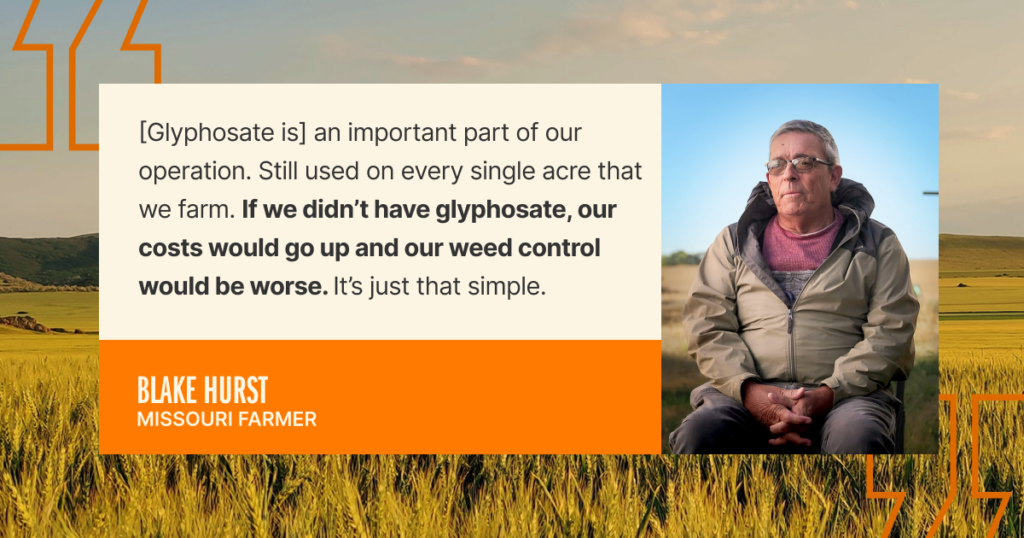
The impact goes far beyond weed control alone. Crop protection tools made it possible for his farm to transition fully to no-till production, a change that reshaped how he stewards his land.
Before no-till, fields were worked multiple times each season to control weeds. That meant more soil disturbance, more erosion, and more fuel burned. Today, Blake’s farm makes far fewer passes across the field.
Confidence grounded in science
Blake also speaks directly about safety, something he believes is often misunderstood in public conversations.
As someone who works the land every day — and whose family and employees work alongside him — Blake trusts the regulatory system and the decades of research behind the tools he uses.
Modern Ag Alliance stands with Blake
Blake’s story reflects what farmers across the country are working to do every day: produce abundant food, conserve their soil, and operate responsibly using tools that have been studied and proven effective.
The Modern Ag Alliance exists to elevate farm voices like Blake’s and ensure policymakers understand what’s at stake when access to safe, science-based crop protection tools is threatened.
Because protecting farmers’ access to proven tools means protecting conservation progress, rural communities, and the food system Americans rely on every day.
Hear more from Blake in this video: https://www.instagram.com/reels/DVKJ7lYCaEO/