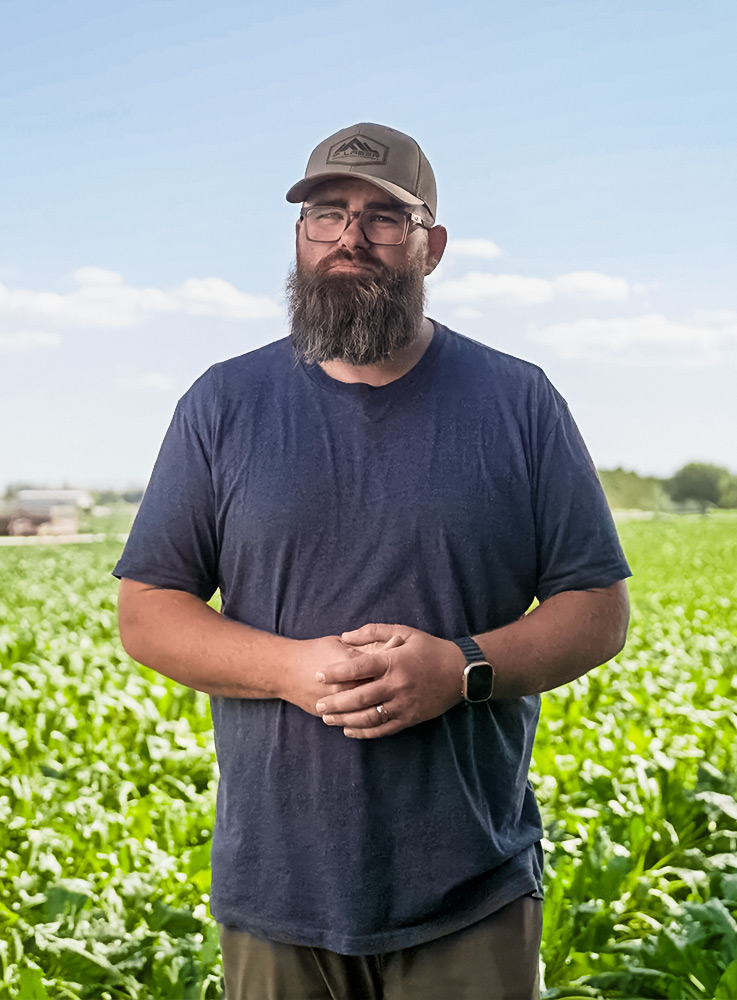
Meet Austin Poulson: A Fifth-Generation Idaho Farmer Building the Future of Sustainable Agriculture
Fifth-generation farmer Austin Poulson lives and works on soil his family has cared for for more than 115 years. He farms potatoes, sugar beets, and wheat—just as generations before him did—but the way he farms, and the tools he relies on, look vastly different.
For Austin, farming is about commitment to the land, family, and the responsibility of carrying something forward.
“Farming to me is about working with the land, working with what the earth can do, what the land can do, the potential that it has. And I take our responsibility, my responsibility as a farmer very seriously.”
This sense of purpose shapes how Austin approaches every decision on the farm and fuels his dedication to raising crops in ways that strengthen the land rather than deplete it.
Farming for the next generation
Austin speaks often about stewardship—both environmental and generational:
“We depend on the land for everything. It makes zero sense to take your greatest asset, which would be your ground, and destroy it and ruin it. Whether it be for the person that farms it after you, the next generation of your family, it makes zero sense.”
At just 36, Austin has already spent nearly three decades farming alongside his father and grandfather. With that experience comes a clear understanding of how dramatically agriculture has changed and how vital modern tools are to keeping family farms viable.
One of those tools is the most commonly used herbicide, glyphosate, which helps him protect the crops his family has grown for more than a century while reducing wear on the soil that sustains them.
On his farm, glyphosate is used sparingly and carefully. Austin often uses a simple analogy to show how little is required:
“Over an acre … we put on about 32 ounces once or twice a year. And so you think of a large soda that you could get at the gas station, we spread that over an entire acre of 43,000 square feet.”
Because of that efficiency, he explains, this allows his farm to:
- Do fewer tillage passes
- Burn less fuel
- Disturb the soil far less
- Reduce reliance on multiple other herbicides
What glyphosate means for farmers like Austin
Austin knows that there is a lot at stake when it comes to losing access to crop protection products like glyphosate, both for his farms and for American consumers, especially when it comes to sugar beets, a crop that historically demanded immense labor and time to manage weeds.
“Without glyphosate, it would be very hard for us to grow sugar beets in this region and probably across the country, which would cause the sugar prices to go through the roof.”
For a multi-generation family operation like his, the consequences would be immediate: higher costs and less reliable yields. For consumers, the impact would show up quickly at the grocery store.
Modern Ag Alliance Stands With Austin
Austin represents the future of Idaho agriculture: deeply rooted in family tradition yet fully committed to modern stewardship, efficiency, and science.
MAA advocates for farmers like Austin—producers who are doing everything right, using today’s tools responsibly, thoughtfully, and with the long-term health of their farms in mind. When access to those tools is threatened, their farms, their communities, and our nation’s food supply feel the impact.
MAA is here to make sure their voices are heard.
👉 Share Austin’s story on Instagram:
https://www.instagram.com/p/DRfFi5RidDK