
New Data Underscores the Growing Strain on America’s Farmers
A new analysis highlighted in Politico’s Morning Agriculture reinforces what farmers across the country already know: this is an increasingly difficult moment for American agriculture.
Over the past five years, the United States has lost nearly 150,000 farms, according to data from the U.S. Department of Agriculture analyzed by Politico. Farmland has also declined by more than 21 million acres nationwide.
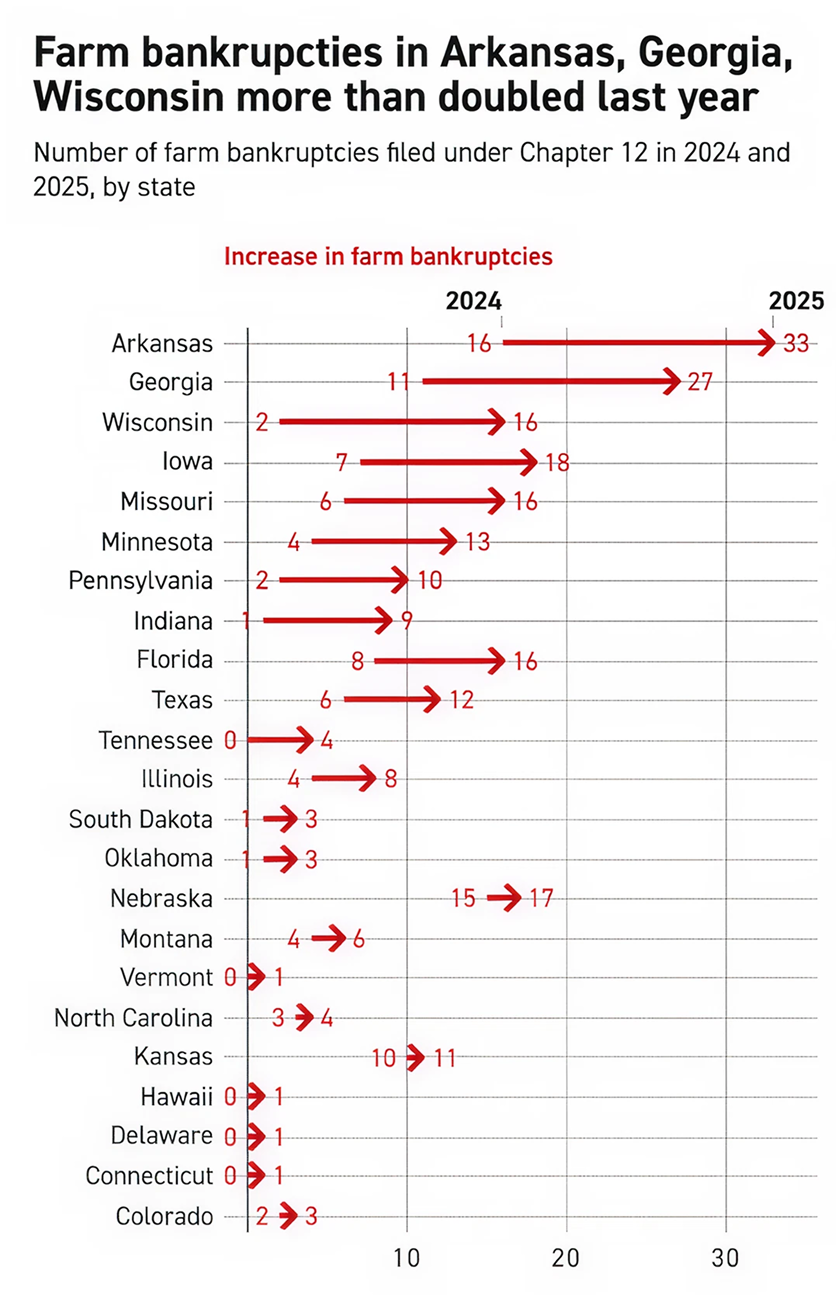
Source: Politico’s Morning Agriculture
A tough economic environment
As detailed in Modern Ag Alliance’s State of the American Farmer report, farmers are facing pressure from multiple directions at once.
Input costs remain high, commodity prices have weakened, and farmers operate on extremely tight margins.This squeeze on profitability and regulatory uncertainty makes for an increasingly challenging market for farmers.
All of these trends have weighed heavily on growers’ outlook of agriculture::
- Only 55% of farmers feel confident in passing down their farm to the next generation.
- 60% of farmers say farming may cease to exist as we know it without a course correction.
The need for certainty and legislative action
At a time like this, predictability and cost management are critical.
Farmers rely on a range of tools and technologies to maintain yields and control expenses. Crop protection tools play a key role in helping farmers manage weeds efficiently and keep production costs in check.
When those tools become more expensive, restricted, or uncertain, it adds another layer of risk to an already challenging environment.
For farmers operating on tight margins, even small increases in cost or uncertainty can have outsized consequences.
The challenges outlined in this latest data come at a time when policymakers are debating the future of agricultural policy, including the Farm Bill.
What farmers need: Policies that recognize current economic realities and provide a more stable, predictable environment to operate in. This includes supporting science-based, consistent regulatory frameworks and avoiding policies that limit access to essential crop protection tools.